
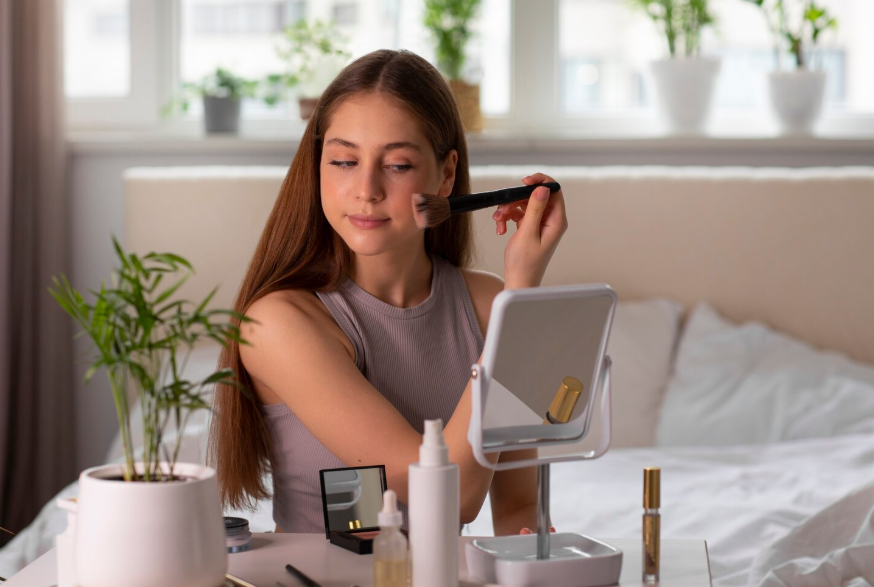
What people search for in these spaces reflects who they are trying to become or protect, rather than how they want to look.
Beauty and wellness search trends have shifted far beyond makeup tips or fitness routines. Today’s trends reveal how people use appearance, health practices, and self-care rituals to negotiate identity in a world where traditional markers of self-definition feel less stable.
Beauty Searches Reflect Identity Signaling
Modern beauty trends are less about conformity and more about expression. Searches increasingly focus on customization, personalization, and niche aesthetics rather than universal standards.
People look up specific styles, routines, or looks that align with how they see themselves or want to be perceived. Beauty becomes a language that communicates values, moods, and a sense of belonging. Whether minimal, bold, natural, or experimental, the choices signal identity before words ever do.
Search engines capture these signals as people test how external presentation aligns with internal self-image.
Explore Search Trends That Indicate Changing Trust in Experts to see why people question authority.
Wellness Trends Emphasize Internal Alignment
Wellness searches have evolved from fitness-centric goals to a focus on internal balance. Queries related to nervous system regulation, sleep optimization, and emotional well-being have grown steadily.
This shift suggests that wellness is no longer about performance alone. It’s about alignment; feeling coherent inside. People search for practices that promise calm, clarity, or grounding rather than transformation through effort.
Wellness becomes a stabilizing force when identity feels fragmented by external demands.
See What Trending Diet Searches Say About Control and Uncertainty to understand why routines feel stabilizing.
Control and Agency Drive Both Spaces
Beauty and wellness trends share an everyday psychological driver: agency. In environments where larger systems feel uncontrollable, the body becomes a domain where choice still exists.
People can decide how they care for themselves, how they present themselves, and which beauty rituals they adopt. Searches for routines, products, and practices reflect this desire to exert influence tangibly.
These trends don’t indicate vanity or self-obsession. They demonstrate a search for autonomy through self-directed care.
Identity Is Negotiated Through Experimentation
Search behavior shows that people often move through phases, trying different beauty aesthetics or wellness approaches over time. These aren’t random shifts; they’re exploratory.
Each new trend offers a temporary framework for identity. People try it on, evaluate how it feels, and adjust. Search engines become tools for experimentation, allowing low-risk exploration before commitment.
This fluidity reflects a broader cultural shift away from fixed identities toward adaptive ones.
Discover What Search Spikes Around Meaning and Purpose Reveal to connect self-care with identity.
Social Media Amplifies Identity Feedback Loops
Beauty and wellness trends are heavily influenced by visibility. Social platforms repeatedly surface particular looks, habits, or philosophies, framing them as desirable or aspirational.
This exposure creates feedback loops. People search to understand how to participate, or whether they want to. Searches often include qualifiers like “is this worth it” or “does this actually work,” showing critical engagement rather than blind adoption.
Search behavior reveals negotiation, not submission, to trend pressure.
Read Why a Single Viral Video Can Resurrect Forgotten Products to learn how trends spread.
What These Trends Say About Modern Selfhood
Ultimately, beauty and wellness searches reveal how people construct identity under pressure. When external roles are unstable and future paths unclear, self-care becomes a way to anchor meaning.
These trends show people seeking coherence between how they look, how they feel, and how they live. Beauty and wellness aren’t distractions from identity work. They are tools for it.
Search data captures selfhood in motion, shaped by choice, context, and the desire to feel whole.